
Body Dissatisfaction among EPTS Students
Survey: Relationship of Preferences of Social Media and Gender on
Body Dissatisfaction
Abstract
This study is conducted with the purpose to observe the relationships of body dysmorphia trends in the student population with social media usage. Using Google Forms, We surveyed 79 students, consisting of 39 girls and 40 boys, about their preferred social media and their ideal weight. This sample is representative of students in the English Program for Talented Students in Patumwan Demonstration School. In this study, we analyzed three possible points and their relationship to the level of body satisfaction including types of social media platforms preferred, the number of followers on Instagram and genders.
Preferred Social Media Platform
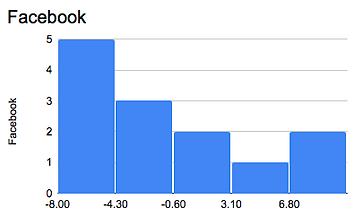
Figure 1: Preference in Facebook and Weight Gap

Figure 2: Preference in Twitter and Weight Gap
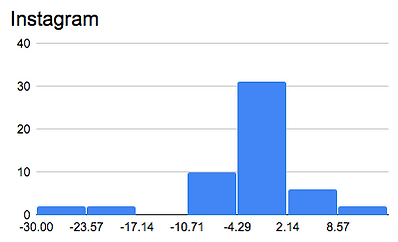
Figure 3: Preference in Instagram and Weight Gap
On average, Twitter users want to lose their body weight more than other social media users since the mean is losing 4 kg. Facebook users want to lose 1.31 kg on average and Instagram users want to lose 2.72 kg on average. Instagram users have the most variation in their differences between current weight and ideal weight with the standard deviation at 7.53 kg compared to Twitter’s 6.24 and Facebook’s 5.68.
Analysis
The graph of Instagram users’ distribution of actual and ideal weight differences approaches a normal distribution the most however this may have to do with a larger sample as it seems more people spend more time on Instagram than other apps. Facebook’s graph has an extremely skewed distribution towards losing more weight.
It is important to note the specific nature of each social media outlet. Instagram emphasizes pictures, particularly of the user, while Facebook emphasizes lifestyle sharing, news, games, and information. Twitter is another type of social media, focusing on links and short texts, and photos of the user are rarely posted on to the platform.
In our survey, Twitter users are the groups that wish to lose the largest amount of weight. While this does not completely disprove the argument that social media induces dysmorphia, it allows us to comfortably prove the notion that people attempt to lose weight because they follow social media models are false.
Our spreadsheets show that some people in our cohort wish to are overweight for their age, and they want to significantly reduce their weight presumably to health reasons. If this presumption is true, it explains the relatively high standard deviation - extreme groups on the spectrum significantly influenced how the data turned out.
The two reasons, both weight reduction desires to be highest from users of an outlet that does not promote physicalities, and the fact that a significant portion of respondents seems to simply want to lose weight for other reasons rather than being social media suggests that the widespread belief that teenagers wish to reduce weight due to social media’s influence is not accurate.
Limitation
Still, we recognize the limitations of our subjects, primarily because of the concentrated environment the subjects are in. In short - the survey participants come from a group that seems to have a share of opinion on social media, and how they know well enough to not let such things influence them.
We would also like to have a larger sample group to see how the data behaves. If it approaches the standard normal distribution with a mean showing low weight change magnitudes, it would further prove the idea that social media does not influence it’s users on weight and body image, as it shows that the people’s opinion is normally distributed along the reasonable spectrum, which is within 2-3 kilograms.
Number of Followers on Instagram

Figure 4: Histogram of Instagram followers versus the Absolute Weight Gap
The histogram of Instagram followers and the absolute weight gap show an evident decreasing trend. EPTS boys and girls who have none or fewer followers on Instagram tend to have a higher interval between their current weight and ideal weight. As the number of followers increases, the weight interval apparently decreases. This trend indicates that Instagram followers have an impact on the students’ level of satisfaction with their weights: with fewer followers on Instagram, the level of dissatisfaction about their weight tends to be higher.

Figure 5: Instagram Followers and Weight DIfferent
The weight gap between the students’ actual weights and their ideal weights is generally larger for students with less followers. Some students with less followers have very low ideal weights relative to their actual weights while some are content with their current weights. Students with more followers have ideal weights that are generally lower than their actual weights but the differences are more subtle.
Relevance of Gender

Figure 3: Histogram of Weight Gap Distribution Among Girls from the Sample
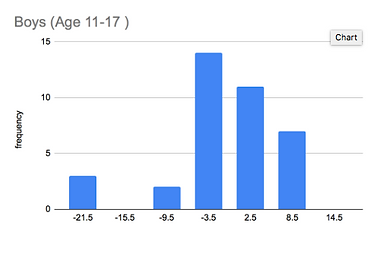
Figure 2: Histogram of Weight Gap Distribution Among Boys from the Sample
Both genders, on average, expressed the desire to lose weight. While, the trend for girls suggests fairly similar trends in comparison to others in the sample, the variety among boys is more vast. However, the ratio between those who want to lose and gain weight is around 1.2. For girls, in comparison, the ratio lies at 2.9. This suggests that there is more difference between those who want to lose and gain weight among boys in relative to girls. The majority of both genders, however, wants to lost between 1-6 kg.
Analysis
According to the statistics, there are slight differences between the results in each gender. The majority of girls desire to lose some weight while boys tend to have many preferences, including gaining weight and losing weight. Thus, it can be inferred that genders influence the weight preference for some degree.
Several studies suggest that boys have a tendency to gain weight and girls towards losing weight. Men have more muscle tissues than women which causes them to burn calories and men usually lose more weight during a short period of time. Due to the biological difference, it may indicate the data that more boys wish to gain weight because they can lose weight more readily.
However, two different genders, from this observation, generally have a similar level of body dissatisfaction. This is illustrated by approximately 82.05% of girls and 82.5% of boys who expressed the desire to change their weight through the survey. This trend was also suggested in a study conducted in Lebonese High School (Sukariyah & Sidan, 2015) which displayed up to 73.1% of girls and 69.6% of boys with desires to change their body weight.
Room for Improvement
There are several areas for improvement in this research. First, being high school students, we are only able to efficiently survey a small population, which is our fellow students. Our survey will have greater impact with a larger population and a larger sample. Second, we should have asked about each person’s reason for their difference in actual weight and ideal weight, as this would have given us more data to analyze. We hope that our next surveys will give a better representation and a better analysis of health statistics in society.
References
-
Chiriboga, David E, et al. “Gender Differences in Predictors of Body Weight and Body Weight Change in Healthy Adults.” Obesity (Silver Spring, Md.), U.S. National Library of Medicine, Jan. 2008, www.ncbi.nlm.nih.gov/pmc/articles/PMC4355617/.2
-
Sukariyah, Mohamad B., and Rihab A. Sidani. “Prevalence of and Gender Differences in Weight, Body, and Eating Related Perceptions among Lebanese High School Students: Implications for School Counseling.” Procedia - Social and Behavioral Sciences, Elsevier, 1 Jan. 2015, www.sciencedirect.com/science/article/pii/S1877042814064842.