Breast Cancer
- mrsaepts
- Feb 8, 2024
- 3 min read
BY Pitchapa Srisamut
EDITED BY Jittanan Tirawatthanaprapha
What is breast cancer?
Cancer is a medical condition where cells grow uncontrollably. Such unmanageable growth of cells can spread to its surrounding tissues along with other parts of the body later on (metastasize), which may result in fatal consequences.
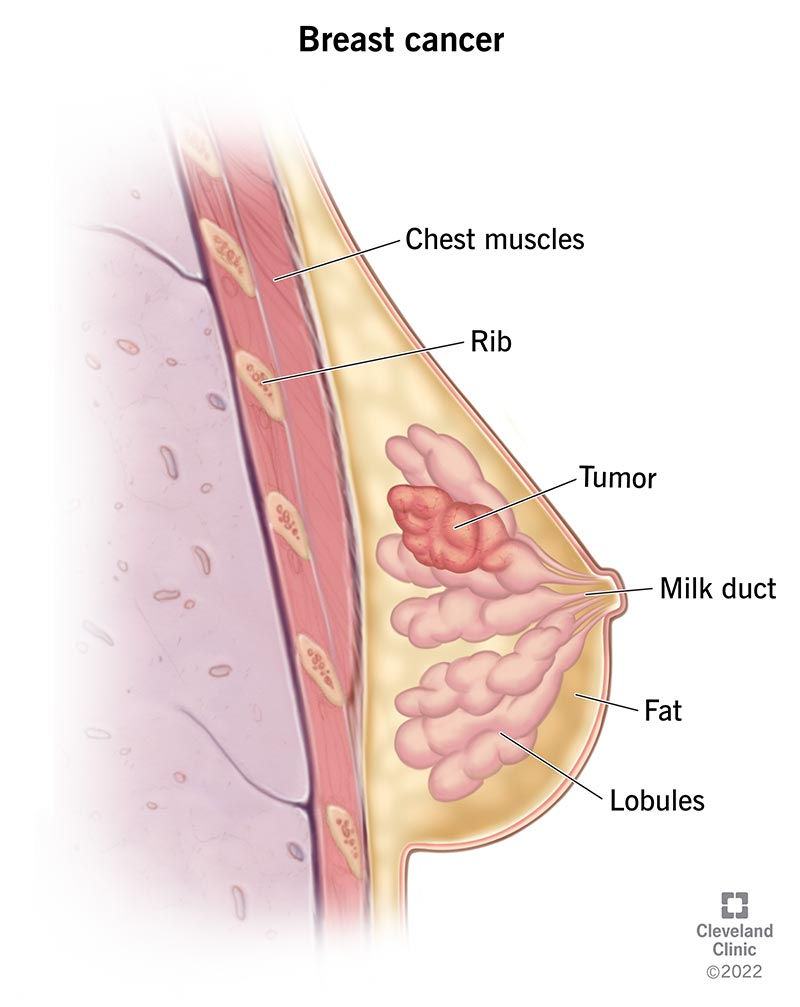
Breast cancer is a branch of this disease where the cancer cells originated in the breast. Inside the organ, there are three main parts: the lobules necessary for milk production, ducts, and connective tissue. Based on information provided by the Centers of Disease Control, the most common kinds of breast cancer are invasive ductal carcinoma and invasive lobular carcinoma. These two kinds of breast cancer mainly differ in their origins; they start in the ducts and lobules of the breast respectively (Centers of Disease Control). It is commonly occurring in women over the age of 50 although individuals of lower age are no exception; nevertheless, the disease is also known to affect men.
Causes
In modern medicine, the causes of cancer are not thoroughly understood; however, these following are some possible factors:
Age
The older one becomes, the more risks of being diagnosed with the disease.
Family history
According to the National Health Service, breast cancer typically does not run in families. However, it has been reported that genes BRCA1 and BRCA2 are able to increase the likelihood of getting breast cancer. Meanwhile, TP53 and CHEK2 are also associated with increasing chances of breast cancer. Unfortunately, studies have shown that these genes are heritable.
Previous diagnosis and/or non-cancerous lumps
Being diagnosed with breast cancer in the past directly affects the risks of a person to be afflicted as the illness is more likely to return. Even if one has never been identified with such malignant cells, certain kinds of benign cells may raise their chances ever so slightly.
Alcohol consumption
Similar to various medical conditions, alcohol may influence a person’s chances of getting the disease.
Having dense breasts
Having dense breast tissues means there are more cells susceptible to cancer.
Symptoms
Symptoms of breast cancer vary in different individuals. The symptoms can range from swelling or thickening in the breast area, lumps, irritation, red or flaky skin to discharge other than milk. Some may experience changes in size of the breast. Feeling pain in any area of the breast counts as a warning sign.
Diagnosis
Screening—mammograms, CT scans, and X-rays, for example—remain among most common methods of diagnosis. Other practices include different kinds of biopsy, namely needle aspiration, needle biopsy, and vacuum-assisted biopsy.
Furthermore, after diagnosis, the condition of breast cancer in a patient is characterized into stages of increasing severity from 1 (least affected) to 4 (most affected).
Treatment
Although there are currently no recognized cures for cancer of any kind, there are treatments which may lead to recovery. They mainly include:
Surgery: Patients undergo operations to remove the cancer cells directly.
Chemotherapy: Patients receive medications to treat the cancer cells.
Radiation Therapy: Patients’ cancer cells get killed by high-energy radiation.
Prevention
Nowadays, the topic of cancer cures and prevention is still being researched by medical professionals. These studies have yet to discover a concluded answer to the question. Thus, what an individual could do to reduce their risks of being afflicted by the disease is to maintain a healthy weight, stay physically active, and refrain from alcohol consumption.
References
“What Is Breast Cancer?” Centers for Disease Control and Prevention, 27 July 2023, www.cdc.gov/cancer/breast/basic_info/what-is-breast-cancer.htm.
“Breast Cancer in Women.” National Health Service, 11 Apr. 2023, www.nhs.uk/conditions/breast-cancer.
“Causes.” National Health Service, 21 July 2023,
“Predictive Genetic Tests for Cancer Risk Genes.” National Health Service, 20 June 2023, www.nhs.uk/conditions/predictive-genetic-tests-cancer.
Comments