Glioblastoma
- mrsaepts
- Nov 16, 2022
- 2 min read
BY Aksarapaka Darbtham, Nuttawat Anuwongnukroh
Edited by Napasjutha Kongsonthana

Hey! Have you ever seen a Netflix show named Lenox Hill? Some part of this documentary was filmed in the Lenox Hill Hospital Neurosurgery Department starring David Langer M.D. and John Boockvar M.D. with their co-starring real-life patients with this type of brain tumor named Glioblastoma.
But, what is Glioblastoma or Glioblastoma Multiforme or Glioma or GBM?
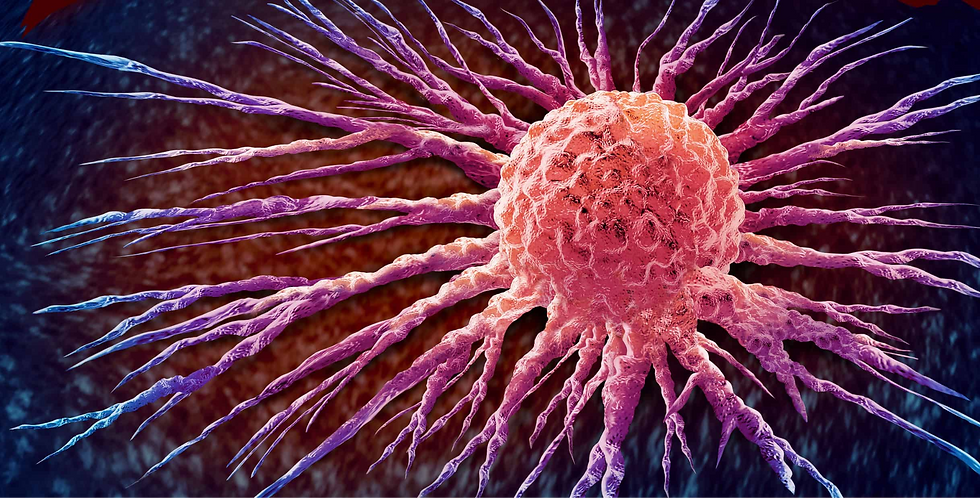
Glioblastoma is a type of brain tumor found most commonly in adults. GBM can be developed from 5-pointed star-like astrocyte cells, and when it becomes grade 4, the survival rate and time are too short to prepare, mainly less than a year. Therefore, many people and medical staff are worried about GBM.
Symptoms and Causes
Since it is located in the brain, most of its symptoms are CNS related and nerve problems. However, in early grades, patients are having less or no symptoms, and when they appear, their prognosis wouldn’t be so great as if found by early detection.
Blurred or double vision.
Headaches.
Mood or personality changes.
Muscle weakness or balance problems.
Nausea and vomiting.
Seizures.
Speech problems.
Hemiparesis
Meanwhile, GBM’s main causes are not known, yet there are some risk factors to increase the chances of GBM.
Head area radiation
Family history of brain tumor
Diagnosis
Fundamentally, physicians will do the general neurological exam and ask patients some screening questions to take a look at the signs and symptoms of neurological diseases. And if there are clues for a brain tumor, they could send the patient for imaging and lab tests following down below.
Computed tomography (CT SCAN)
Magnetic resonance imaging (MRI SCAN)
Positron emission tomography (PET SCAN)
Magnetic resonance spectroscopy (MRS SCAN)
Cerebral angiography
Biopsy
Treatments
Recently, there is no curative treatment, but surgery is the main procedure along with chemotherapy and some clinical trials. Since GBM could happen in people of all ages and genders, doctors could make individual integrative plans for each patient which is mostly similar to other brain tumors.
Radiation therapy
Intensity-modulated radiation therapy (IMRT)
Stereotactic radiosurgery
Chemotherapy
Targeted therapy.
Tumor treatment fields (TTF)
In some cases, patients and their families might decide not to continue their treatment and use this precious time together to support everyone’s heart with quality, then let the patients pay their debt to nature peacefully.
Supportive (palliative) care
As in the Netflix Lenox Hill, Glioblastoma needs multiple hands from medical staff, patients, their families, and friends. To find more on how and why, please go directly to your Netflix account and enjoy this fantastic medical documentary.
To discover more about other topics, please follow more on the MRSA page.
Comments:
Although brain tumors, glioblastoma, cannot be cured. But if the patient is diagnosed and treated quickly. It will be able to reduce the impact that may occur including helping to extend the life of the patient longer.
Sources:
C:
E:
G:
Ostrom, Q.T., et al.,
https://academic.oup.com/neuro-oncology/article/19/suppl_5/v1/4596648 Neuro Oncol, 2017. 19(suppl_5): p. v1-v88.
H:
Comments