Myasthenia Gravis
- mrsaepts
- Dec 7, 2023
- 3 min read
BY Chate Therdkiet, Shinnisha Chulapongwanich, Pimphadar Wongves
EDITED BY Pakpol Kunopasvorakul, Pich Paholpak
What is Myasthenia Gravis?
Myasthenia Gravis is an autoimmune disease that can occur at any age and, categorized as a neuromuscular disorder, it is characterized by muscle weakness and fatigue in several organs, the muscle this disease affects is the skeletal muscle which is used for voluntary movements. Despite Myasthenia Gravis being a disorder that usually is not fatal, there are cases which became life threatening due to uncontrolled treatment. It is important for individuals with Myasthenia Gravis to work closely with healthcare professionals to manage the condition.
Causes and Symptoms
Causes of Myasthenia Gravis:
Myasthenia gravis is primarily rooted in an autoimmune response, where the body's immune system mistakenly produces antibodies that target acetylcholine receptors at the neuromuscular junction. Acetylcholine receptors play a crucial role in transmitting signals between nerve cells and muscles. In individuals with myasthenia gravis, these antibodies block the acetylcholine receptors, leading to muscle weakness. Moreover, abnormalities in the thymus gland are often associated with the condition. The thymus, an organ involved in the immune system, may exhibit overactivity or the presence of thymomas (tumors), contributing to the autoimmune response. While there is no direct inheritance pattern, there is evidence of a genetic predisposition to the disease.
Symptoms of Myasthenia Gravis:
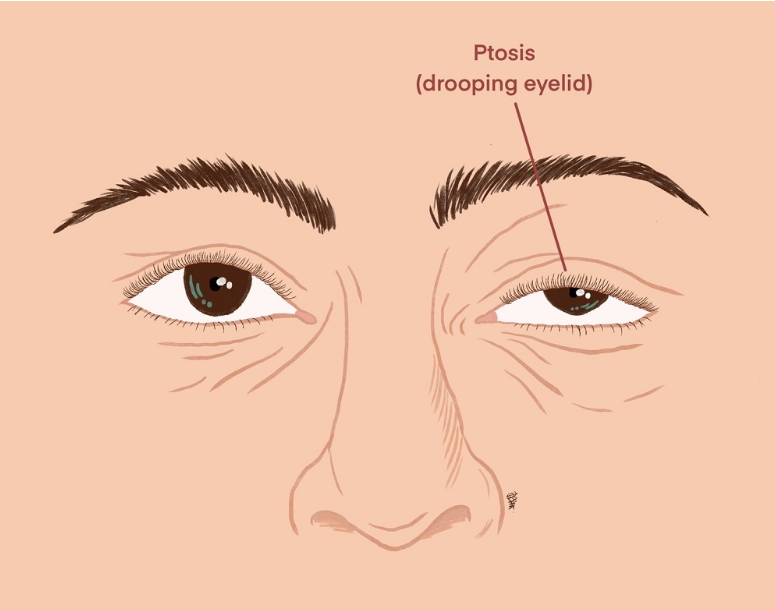
The hallmark symptom of myasthenia gravis is muscle weakness, a characteristic that exacerbates with activity and improves with rest. Commonly affected muscles include those controlling eye and eyelid movement, facial expression, chewing, and swallowing. Drooping eyelids (ptosis) often manifest as an early sign, resulting from weakened eyelid-controlling muscles. Double vision (diplopia) can occur due to weakness in the muscles controlling eye movement. Difficulty swallowing (dysphagia) is another prevalent symptom, posing risks of aspiration. Fatigue is a pervasive issue, with muscles tiring easily, particularly after extended use. In severe cases, myasthenia gravis can impact the muscles involved in breathing, leading to respiratory difficulties. The range and severity of symptoms can vary among individuals, and while the disease can occur at any age, it is more prevalent in specific age and gender groups, such as women under 40 and men over 60. A timely consultation with a healthcare professional is crucial for an accurate diagnosis and appropriate management
Risk factors
-Age & Gender: Myasthenia Gravis usually shows up in women that are under 40 and in men that are over 60.
-Thymus Gland Abnormalities: People with Myasthenia Gravis frequently have abnormalities in the thymus gland, which is involved in the immune system. The development of the disorder may be associated with an enlarged thymus.
-Family History: There are genetic components to autoimmune diseases which play a factor in a higher chance of developing the disorder.
-Medications: There are specific narcotics which have a side effect on Myasthenia Gravis such as statins, beta-blockers and certain types of medications to treat high blood pressure.
-Infections: Viral or bacterial infections may lead to the development of Myasthenia Gravis or even worsen the present symptoms if one already has the disorder.
-Pregnancy: Physical stress may lead to a higher demand on the body which causes more fatigue on top of the existing disorder, worsening the symptoms. However, some are not at all affected by pregnancy due to cases of being consistent with medication and treatment.
Treatment
Myasthenia gravis is difficult to cure, but it can be approached using various treatment alternatives to suppress the abnormal immune response that leads to the disease. The treatment will be determined based on the age, the overall health and medical history, the level of severity and the pace of its progression.
There are three types of medications used to treat myasthenia gravis : pyridostigmine, steroids and immunosuppressants.
In terms of pyridostigmine, it is a tablet which helps strengthen the communication between nerves and muscles. It may include plausible side effects such as stomach cramps, diarrhea, muscle twitching and feeling sick. In case pyridostigmine only provides short-term relief, it is prominent to take steroid tablets such as prednisolone. Another approach is called immunosuppressants such as azathioprine and mycophenolate, it helps lower the activity of the immune system.
In some cases, a surgical treatment called thymectomy is used to remove the thymus gland which is located in the middle upper chest behind the breast bone. The surgery can lower the steroid doses, reduce the chance of taking other immunosuppressants, and provide lower chances of having worsening symptoms.
References:
Pushpa Narayanaswami, M. (2021, April 12). How is treatment for myasthenia gravis evolving?. Harvard Health. https://www.health.harvard.edu/blog/how-is-treatment-for-myasthenia-gravis-evolving-2021041222358
NHS. (n.d.). NHS choices. https://www.nhs.uk/conditions/myasthenia-gravis/treatment/
Mayo Foundation for Medical Education and Research. (2023, June 22). Myasthenia Gravis. Mayo Clinic. https://www.mayoclinic.org/diseases-conditions/myasthenia-gravis/diagnosis-treatment/drc-20352040
U.S. Department of Health and Human Services. (n.d.). Myasthenia Gravis. National Institute of Neurological Disorders and Stroke. https://www.ninds.nih.gov/health-information/disorders/myasthenia-gravis
Myasthenia Gravis. Johns Hopkins Medicine. (2023, February 24). https://www.hopkinsmedicine.org/health/conditions-and-diseases/myasthenia-gravis
professional, C. C. medical. (n.d.). Myasthenia Gravis: What is it?. Cleveland Clinic. https://my.clevelandclinic.org/health/diseases/17252-myasthenia-gravis-mg
Myasthenia Gravis คืออะไร. – ศูนย์กายภาพบำบัด คณะกายภาพบำบัด มหาวิทยาลัยมหิดล. (2023, March 10). https://pt.mahidol.ac.th/ptcenter/knowledge-article/myasthenia_gravis/

Comments