What is Myocardial Infarction?
- mrsaepts
- Jul 3, 2023
- 3 min read
Updated: Jul 31, 2023
BY Krit Tunpow, Pasook Wattanachai, Napat Naiyavitit
EDITED BY Pich Paholpak
What is Myocardial Infarction?
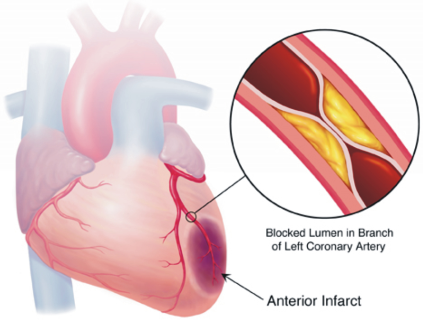
Myocardial infarction, frequently referred to as a heart attack, is a fatal medical ailment regarding the absence of blood flow to heart muscles, which leads to the unavailability of oxygen-rich blood to nourish the body and damage or death to the heart muscle. The absence of blood flow can be related to multiple factors, however, the most common would be the result of blockages in heart arteries (atherosclerosis) where fats, cholesterol, and other substances form plaque on artery walls.
Risk Factors
There are various risk factors surrounding heart attacks both controllable, and uncontrollable. The following are some key factors for having a myocardial infarction:
Age and sex: As age grows, the chance of getting a Myocardial Infarction also increases. However, the sex of a person also determines when the risk starts to rise. In males, the risk of getting a myocardial infarction dramatically increases at the age of 45. On the other hand, the risk in females drastically increases at 45 or when menopause.
Family history: An individual's chance of suffering a heart attack might be considerably increased by a family history of the condition. It is crucial to let medical professionals know if family members, including parents or siblings, have had heart disease or heart attacks from a young age. This data helps in identifying personal risk profiles and taking measures to avoid them.
Lifestyle: Risky behaviors such as smoking, drinking, and drug use can increase the chance of getting a Myocardial Infarction.
Health condition: Having certain health conditions such as obesity, diabetes, and hypertension could increase the chance of getting a Myocardial Infarction.
Treatment
Heart attacks must be treated immediately before any more heart tissue is damaged and would eventually die. The treatment is needed to fix the blood flow (the main cause of heart attacks) and restore oxygen levels back to its normal state. Numerous techniques of treatment have been used, mostly depending on the complete or only partial blockage of blood flow.
Primary/immediate treatment:
Aspirin/Clot busters; reduction of blood clotting
Heparin; makes blood less sticky, less likely to clot
Nitroglycerin; widens blood vessels
Morphine; for relieving chest pain
Beta blockers/ACE inhibitors; commonly used, slows down heartbeat and decreases blood pressure
Statins; lower unhealthy cholesterol (one cause of artery clotting)
Other procedures (surgery & rehabilitation):
Surgery; done to open blocked arteries, many ways of surgery could be done
Coronary angioplasty & stenting (PCI); for opening clogged heart arteries. Doctors put a thin flexible tube into the clogged artery, then inflates a tiny balloon to widen the artery, therefore improving blood flow
The stent; helps keep the artery widened to lower the risk of future artery blockage
Coronary artery bypass (CABG); replace blocked artery with new blood vessels from other parts of the body. Creates a new path for blood flow. Sometimes done immediately (a few hours) when heart attack occurs, and sometimes done after a few days of recovery.
Cardiac rehabilitation; personalized exercise and education to perform after heart surgery. Duration of about a few weeks or months after returning home. Focuses on exercise, a heart-healthy lifestyle and stress management.
Causes and Symptoms of a Myocardial Infarction
The most common cause of a heart attack is the narrowing on the coronary arteries that supply blood to the heart. This narrowing can be caused by a buildup of plaque, which is a fatty substance that can clog the arteries, leading to the person not having enough blood supply for their hearts.
Other causes of heart attacks may include:
Blood clot that blocks an artery.
A blood clot can form in a coronary artery and block the flow of blood to the heart. This can happen if there is a tear in the lining of the artery or if there is plaque buildup in the artery.
Spasm of an artery.
An artery can spasm, or narrow suddenly, which can block the flow of blood to the heart. This is a rare cause of heart attacks.
Heart defects
Some people are born with congenital defects in their hearts that can increase their risk of heart attacks. These defects can cause the heart to be enlarged or to have abnormal valves.
Reference:
"Heart Attack (Myocardial Infarction)." Cleveland Clinic, Cleveland Clinic, 30 Oct. 2022, https://my.clevelandclinic.org/health/diseases/16818-heart-attack-myocardial-infarction
"Heart Disease and Stroke Statistics." American Heart Association, www.heart.org/en/about-us/heart-and-stroke-association-statistics
"Healthy Diet." World Health Organization, www.who.int/initiatives/behealthy/healthy-diet#:~:text=A%20healthy%20diet%20is%20essential,are%20essential%20for%20healthy%20diet
"Obesity." British Heart Foundation, www.bhf.org.uk/informationsupport/risk-factors/obesity#:~:text=How%20does%20obesity%20increase%20the%20risk%20of%20heart%20and%20circulatory%20diseases%3F&text=Excess%20weight%20can%20lead%20to,lead%20to%20a%20heart%20attack
"Arteriosclerosis/Atherosclerosis." Mayo Clinic, Mayo Foundation for Medical Education and Research, 8 Feb. 1997, www.mayoclinic.org/diseases-conditions/arteriosclerosis-atherosclerosis/symptoms-causes/syc-20350569
Comments