Why Should We Stay at Home During the Pandemic?
- mrsaepts
- May 28, 2020
- 8 min read
Updated: Jul 2, 2020
By Apichaya Sinchaipanich, Thorphan Tienboon, Jiranath Trimetsoontorn, Dayada Pujchathum, Sirorat Khamwanate, Ninthira Jarupanic, Jin Rushchano
Edited By Pakpop Lekawat, Punyisa Pintola
ABOUT THE VIRUS
Coronavirus disease or COVID-19 is an infectious disease that spreads over the world. In December 2019 there was a case of pneumonia, an infection in lungs, with unknown causes detected in Wuhan, Hubei province, China. Later on 11 March 2020 WHO, World Health Organization, declared COVID-19 as a pandemic. As of 19th May, there are 4.4M cases confirmed to be infected with the virus, 1.59M was recovered and 302K death.
The first reported case of COVID-19 outside China was 13 January 2020 in Thailand. Lumpini boxing stadium is the main source of the transmission of the disease, about 50 boxing fans were infected from here and spread it to other people out there. Later the number of infected cases was growing, so the government declared a curfew from 22.00-04.00 which started on 3 April 2020. Later on, the situation started to get better, and right now there is no new case reported so the government is preparing to end the lockdown.
Most people who were infected with coronavirus will experience mild to moderate symptoms of respiratory illness which they will recover by themselves without any special treatments. However, for the elderly or people with serious health problems (e.g. cardiovascular disease, diabetes, chronic respiratory disease, and cancer), the virus can cause fatal damage to them.
Most of the people who were detected with COVID-19 will have symptoms of fever, dry cough, tiredness, and loss of taste and smell. Somehow, these symptoms are not very serious but if you are having difficulty breathing or shortness of breath, chest pain or pressure, loss of speech, or movement they are quite serious symptoms which you should seek for medical attention.

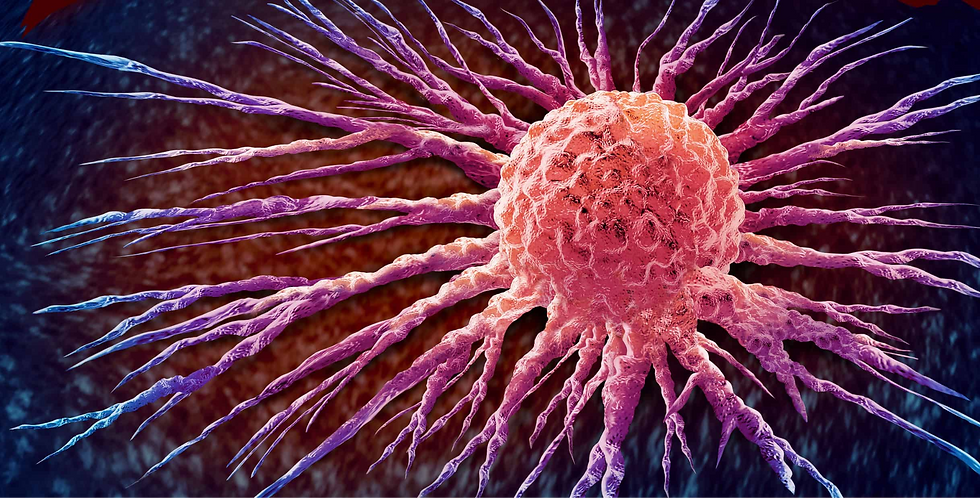
Fig. 1 Corona Virus (asm.org)
HOW DOES IT SPREAD?
It is believed that the coronavirus spreads person to person. The following details are the ways in which the virus can transmit.
Droplets - Coughing, sneezing, or talking by an infected person cause droplets with the virus which can spread in the air within 6 feet. People who are in the range can take in the droplets through their nose and mouth and get infected.
Air Transmission - After the droplets spread, the virus can stay active in the air for up to 3 hours. People who inhale the air with the virus can easily get infected because the virus gets directly into the lungs.
Surface Transmission - When an infected person coughs or sneezes, the droplets with the virus can fall and cover surfaces such as tables, doorknobs, and even handrails in the subway. When people touch those things with bare hands and then touch their eyes, nose, and mouse, they may get the virus. Moreover, research shows that the virus can stay alive on surfaces for a couple of days.
Fecal and Oral - Some studies have pointed out that the virus particles can be detected in a person’s feces. However, it is still not confirmed that people can get infected by contacting an infected person’s feces.
Accordingly, the virus can be transmitted in many ways even if you make sure that you are staying away from infected people or people with symptoms. In order to stop spreading the virus, we need to know how to prevent it.
PREVENTION
During the coronavirus pandemic, it is crucial to protect and prevent yourself as well as others from infecting and spreading the disease. Hence, simple precautions can be taken to prevent and reduce the chance of infecting COVID-19.
Wash your hand regularly and thoroughly with soap and water for at least 20 seconds or use alcohol-based hand rub especially after you have been in a public place or after sneezing or coughing. In doing so, the viruses that may be on your hand are eliminated.
Avoid close contact and maintain at least 1-meter distance between yourself and others. Thus avoid going to a crowded place as it is more difficult to maintain physical distance. Since infected people without symptoms being shown can still spread droplets and infect others that are nearby.
Avoid touching eyes, nose, and mouth. Your hands touch many objects and can pick up the virus. As a result, the virus can enter your body and you can become infected. Furthermore, make sure you clean and disinfect surfaces that are often touched to make sure that there is no virus on the object you come in contact with.
Cover your mouth and nose with a cloth face mask while you are close to others or in public places. You could be spreading COVID-19 without knowing as you might not have any symptoms. Therefore, wearing a cloth face mask can help protect others in case you are infected. Make sure you always cover your mouth and nose with a tissue when you cough or sneeze if you don’t have any cloth face mask on and don’t forget to dispose of the used tissue and immediately wash your hands after.
If you show one or more symptoms of the disease, such as fever, dry cough, sore throat, runny nose, and difficulty breathing, please seek medical attention. Healthcare professionals could give you supportive care to help relieve symptoms and prevent the spread of the virus.
THE DIFFERENCE
Over the past 5 months, coronavirus creates a big impact on our daily lives whether through lifestyles, economics, or even the health and publicity system which we all have to accept as a new normal. While researchers are on their way finding the cure for this virus, the publicity claims that the ideal time to discover is likely to be 12-18 months away. Until then, the best way to keep control of the virus is extreme social distancing including lockdowns that have shown amazing results on the declining number of patients affected by the virus. Since 23 January 2020, Wuhan, the city in Hubei Province China, has been under the government lockdown which includes closing trade ports and in and out transportation. Moreover, they also made a rule on the hour of curfew and obstructed millions of their citizens from working or going to school. This lockdown of the whole city was first considered as an experiment but turns out to remarkably help slow down the cases from almost 70 new cases a day to no new confirmed infections in Hubei by the end of March 19, based on China’s National Health Commission. From this event, it has proved that social distancing is one major factor to help reduce the spread of this virus.
Certainly, the number of infected individuals will rise dramatically since the COVID-19 virus could spread through the air in forms of droplets by direct contact or touching any contaminated items. After all, some individuals might have unaware habits including eating without washing their hands, doesn’t wearing a mask, and sharing the same utensils with others, the virus could be spreading rapidly. In addition, there would be difficulties in allocating medical resources if more people are getting infected. It will be complicated for medical practitioners to prioritize the amount of treatment that is given to the patients. Hence, if there’s a scarcity in medical resources, doctors might have problems struggling with the more severe health conditions in the upcoming days.
In order to flatten the curve of the outbreak in the country, the Thai government imposes the lock-down policy. People began to work from home and practice hygiene habits. Although this approach has contributed to preventing the spread of the disease, it has directly impacted the country’s economy. Since Thailand’s economy relied heavily on tourists, it is estimated that the economic growth in Thailand will drop slightly from 2.7-3.7% to 1.5-2.5%. Moreover, companies began to lose their income and there is a decrease in the wages of many domestic workers which could potentially lead to debt. On the other hand, there is a positive side to this nationwide curfew. Since people are unable to leave their houses, the usage of vehicles drops dramatically, as a result, there is a reduction of carbon dioxide emissions.
As mentioned before, the best way right now to avoid infections and spreading of COVID-19 while researchers are still out looking for treatments is social distancing. Even though the act of social distancing has shown great results on the decline of infected patients, there are still some countries that didn’t realize the importance of social distancing as fast as it should which extends the period of curing the virus. A significant example is between the US and China. From the very first few months that this virus was introduced, China has been aware of this virus and has been on strict rules for social distancing and lockdown. This gives China no new cases and some areas of the country were opening. While China took only about 4 months to deal with this problem, the US was not much concerned about the virus which made it reach over 81% of the infected population and over 2.2 million people dying. Also, the answer to when will the virus be gone has not yet been answered.
THE STATISTIC
Social distancing is reducing the chances of physical touches in multiple ways such as closing public places, shifting classes to online learning, working from home, encouraging quarantine, and enforcing lockdowns. While social distancing is adopted in many countries as it reduces infected rates of coronavirus, some countries deny this policy since there might be negative impacts on society as a whole.
“It’s better to live on your feet than die on your knees,” said Alexander Lukashenko, the president of Belarus. His statement clearly shows that Belarus rejects to adopt social distancing because it will affect national employment, economy, and politics. In addition, the president believes that isolation is an act of cowardice. As a result, COVID-19 patients in Belarus increase dramatically with the number of cases double in 10 days. Currently, there are 900 new cases and 93 deaths per day on average. According to figures 1a, 1b, and 1c, active cases, total cases, and total deaths in Belarus keep rising constantly. Hence, it is possible that people in a country without a social distancing policy tend to spread the disease easily resulting in an accelerating rate of infection.
The impacts of social distancing are evident in data from China that was the first country to enforce quarantine and lockdown of cities. Wuhan City was overwhelmed with thousands of new cases of Coronavirus each day. China first put Wuhan City start lockdown on January 23.The government meant no travel in and out of the city even for those who had important medical reasons.There lockdown for 59 days. To date, 4,633 people in China died out of nearly 82,919 confirmed cases, while 78,171 recovered. After the lockdown was lifted, there are only 3 new cases per day on average, which is significantly down from thousands of cases per day before lockdown.
When we compare countries employing social distancing and non-social distancing such as China and Belarus, we find that Belarus has a rising number of cases, but China has a decreasing number of cases. We conclude that countries imposing social distancing experienced fewer new cases and their recovery rates are higher because their health care systems, i.e., hospitals, are not overwhelmed and can take care of patients.
WORK CITED
About the Virus
Corona Virus Disease (COVID-19), ddc.moph.go.th/viralpneumonia/eng/index.php#.
“Coronavirus.” World Health Organization, World Health Organization, www.who.int/health-topics/coronavirus#tab=tab_1.
Ltd.Thailand, VOICE TV. “ย้อนไทม์ไลน์นาที 'ประยุทธ์' สู้โควิด-19 ส่งสัญญาณเคอร์ฟิว24 ชม.? - รัฐไร้ทิศทาง ตรวจน้อยเจอน้อย.” VoiceTV, voicetv.co.th/read/t_LF5WB3r.
“Thailand Facing Coronavirus from Italy Which May Be More Virulent than the Asian Virus.” Thai PBS World, www.thaipbsworld.com/thailand-facing-coronavirus-from-italy-which-may-be-more-virulent-than-the-asian-virus/.
How Does It Spread?
Nazario, Brunilda. “How Coronavirus Is Transmitted: Here Are All the Ways It Can
Spread.” WebMD, WebMD, 5 Apr. 2020,
“Coronavirus (COVID-19) Frequently Asked Questions.” Centers for Disease Control and Prevention, Centers for Disease Control and Prevention, 12 May 2020, www.cdc.gov/coronavirus/2019-ncov/faq.html#How-COVID-19-Spreads.
Prevention
“Advice for Public.” World Health Organization, World Health Organization, www.who.int/emergencies/diseases/novel-coronavirus-2019/advice-for-public.
“Coronavirus Disease 2019 (COVID-19).” Coronavirus Disease 2019 (COVID-19) - Prevention | BMJ Best Practice, newbp.bmj.com/topics/en-us/3000168/prevention.
“How to Protect Yourself & Others.” Centers for Disease Control and Prevention, Centers for Disease Control and Prevention, 24 Apr. 2020, www.cdc.gov/coronavirus/2019-ncov/prevent-getting-sick/prevention.html.
The difference when people stay at home Bangkok Post Public Company Limited. “Migrants Jobless and Trapped under Thai Coronavirus Lockdown.” Https://Www.bangkokpost.com, www.bangkokpost.com/thailand/general/1910032/migrants-jobless-and-trapped-under-thai-coronavirus-lockdown.
Bangkok Post Public Company Limited. “Post-Lockdown Roadmap Takes Shape.” Https://Www.bangkokpost.com, www.bangkokpost.com/thailand/special-reports/1902570/post-lockdown-roadmap-takes-shape.
Chapman, Sarah. “Quarantine for Controlling COVID-19 (Coronavirus). New Cochrane Evidence.” Evidently Cochrane, 9 Apr. 2020, www.evidentlycochrane.net/quarantine-covid-19/.
Cohen, Joshua. “Nationwide Lockdowns Can Begin To Halt The Spread Of Coronavirus In A Matter Of Weeks.” Forbes, Forbes Magazine, 20 Mar. 2020, www.forbes.com/sites/joshuacohen/2020/03/19/nationwide-lockdowns-can-begin-to-halt-the-spread-of-coronavirus-in-a-matter-of-weeks/#5014757f12e1.
“Coronavirus: Why China's Claims of Success Raise Eyebrows.” BBC News, BBC, 7 Apr. 2020, www.bbc.com/news/world-asia-china-52194356.
Sault, Samantha. “Why Lockdowns Can Halt the Spread of COVID-19.” World Economic Forum, www.weforum.org/agenda/2020/03/why-lockdowns-work-epidemics-coronavirus-covid19/.
“มุมมองผลกระทบของ COVID-19 ต่อเศรษฐกิจและตลาดทุน.” มุมมองผลกระทบของ COVID-19 ต่อเศรษฐกิจและตลาดทุน | Principal Asset Management, www.principal.th/th/COVID-19.
The Statistic
“Coronavirus Cases:” Worldometer, www.worldometers.info/coronavirus/.
Karmanau, Yuras. “Belarus Holds Victory Day Parade, Disregarding Coronavirus.” AP NEWS, Associated Press, 9 May 2020, apnews.com/b229f6b9efa04d9b4efaa6d9ea147ea7.
Mobarak, Ahmed Mushfiq, and Zachary Barnett-Howell. “Poor Countries Need to Think Twice About Social Distancing.” Foreign Policy, 10 Apr. 2020, foreignpolicy.com/2020/04/10/poor-countries-social-distancing-coronavirus/.
“Response to Covid-19.” YRISE, 11 May 2020, yrise.yale.edu/covid-19/.
“What's Happening in Belarus, the Only European Country to Not Adopt Social Distancing.” Down To Earth, www.downtoearth.org.in/news/economy/what-s-happening-in-belarus-the-only-european-country-to-not-adopt-social-distancing-71040.
Comments